Batting Cage Lighting Design for Indoor Facilities: A Planning Guide
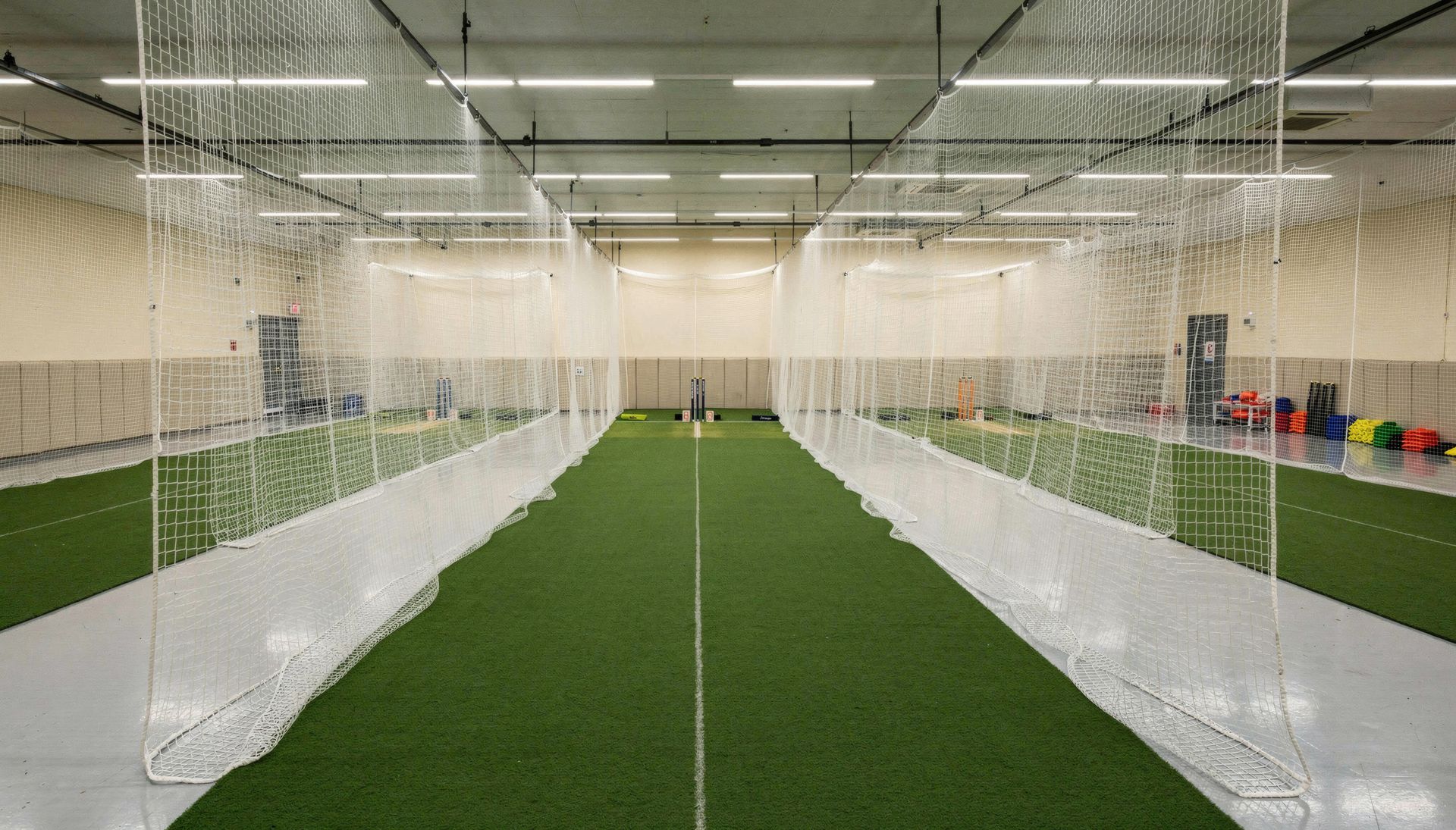
Lighting is one of the most consequential decisions in an indoor batting cage project, and it is consistently one of the most underplanned. A cage that is structurally sound, properly netted, and correctly sized can still underperform as a training environment if the lighting makes it difficult for hitters to pick up the ball out of the pitcher's hand or off the pitching machine.
When Texas Sports Turf & Netting works with schools, training facilities, and athletic programs on indoor batting cage projects in Texas, the lighting conversation is one we have early and deliberately, because fixing a lighting problem after installation is significantly more expensive than planning it correctly the first time.
This guide covers the key elements of indoor batting cage lighting design, from fixture placement and foot-candle targets to glare reduction and safety planning, so facility managers and athletic directors can approach this decision with the information they need.
Why Indoor Batting Cage Lighting Is Different From General Gym Lighting
General gymnasium lighting is designed to illuminate a large open space evenly for a range of activities. Indoor batting cage lighting has a fundamentally different set of requirements that general gym lighting does not address well on its own.
The primary challenge is the tracking task. A hitter in a batting cage must visually acquire a pitched ball or machine-delivered ball against a background that may include ceiling fixtures, structural elements, netting, and the general visual environment of the facility. The ball travels at speeds that require the visual system to work with very little time margin for error, which means the quality of the lighting environment directly affects the hitter's ability to perform the core task the cage was built for.
Shadows are a particular problem in batting cage environments. A lighting layout that creates intermittent shadows along the ball's flight path makes it significantly harder for the hitter to track the ball consistently. This is not simply a comfort issue. It is a training effectiveness issue, and in the case of younger or less experienced hitters who are still developing their visual tracking skills, a poorly lit cage can actually reinforce poor mechanics that compensate for lighting deficiencies rather than developing genuine skill.
Glare from fixtures positioned in the hitter's line of sight is a related challenge. A fixture that falls within the visual field between the hitter's eye and the pitch release point creates a light source that competes with the ball for visual attention and can temporarily impair the visual adaptation needed for ball tracking. Fixture placement that keeps light sources out of the critical visual cone between the batter's box and the release point is a design requirement, not a preference. Indoor batting cage installation planning for Texas facilities covers the broader installation planning considerations that lighting design fits within.
Foot-Candle Targets for Batting Cage Environments
Foot-candles are the unit of illuminance measurement that describes how much light reaches a surface, and establishing appropriate foot-candle targets is the foundational step in batting cage lighting design.
The Illuminating Engineering Society (IES) publishes lighting recommendations for sports facilities that provide reference targets for different activity levels. For recreational and school-level batting cage use, a minimum of fifty foot-candles at the plate and throughout the hitting zone is generally considered the baseline for adequate performance. For competitive training facilities and programs where hitters are working on advanced skills at higher pitch speeds, seventy-five to one hundred foot-candles provides a meaningfully better visual environment that supports more precise ball tracking.
Uniformity is as important as the average illuminance level. A cage that achieves one hundred foot-candles at the plate but drops to thirty foot-candles at the pitcher's end creates an illuminance ratio that makes it difficult for the hitter's visual system to adapt consistently as the ball moves from the brighter background at release toward the darker area approaching the plate. IES guidelines recommend a maximum to minimum uniformity ratio of no greater than three to one for training environments, and achieving this ratio in a batting cage requires careful fixture placement rather than simply increasing overall light output.
Vertical illuminance, which measures light falling on a vertical plane rather than a horizontal surface, is the measurement that most directly corresponds to how well the ball is illuminated in flight. Many lighting designs are evaluated using horizontal foot-candle measurements that do not accurately reflect the lighting conditions that matter most for a moving ball in a training environment. Specifying both horizontal and vertical illuminance targets in the lighting design brief produces a more accurate evaluation of whether the proposed design will actually perform as needed.
Fixture Types for Indoor Batting Cage Applications
The choice of fixture type for an indoor batting cage affects not only the quality of the light produced but also the maintenance requirements, energy consumption, and longevity of the lighting system over the facility's service life.
LED fixtures have become the standard for new indoor batting cage installations and for lighting upgrades in existing facilities, and the reasons are practical rather than simply trend-driven. LED sources produce light output that does not degrade significantly over the first several years of service life, which means the illuminance levels measured at commissioning remain relatively consistent over time rather than declining steadily as fluorescent lamp output declines with age. LED fixtures also produce less heat than metal halide alternatives, which matters in Texas facilities where managing indoor temperature is already a meaningful operational consideration.
Color rendering index (CRI) is a fixture specification that affects how clearly the ball can be distinguished from the background in the lighting environment. A fixture with a CRI of eighty or above produces light that renders colors more accurately and makes objects more visually distinct than fixtures with lower CRI ratings. For a batting cage environment where the ball must be visually distinguished from the netting, structural elements, and general visual background of the facility, CRI is a specification worth including in the fixture selection criteria rather than treating as a secondary consideration.
Color temperature, measured in Kelvin, affects the apparent warmth or coolness of the light and has a secondary effect on visual acuity in sports environments. Color temperatures in the four thousand to five thousand Kelvin range are generally preferred for sports training environments because they provide a neutral to slightly cool light that supports visual contrast without the harshness of very high color temperature sources. Facilities that also use the space for other activities should consider how the batting cage lighting color temperature integrates with the broader lighting environment of the space.
Fixture Placement and Layout Principles
Fixture placement is where batting cage lighting design moves from specification to implementation, and it is the step where the most consequential design decisions are made for the actual visual quality of the training environment.
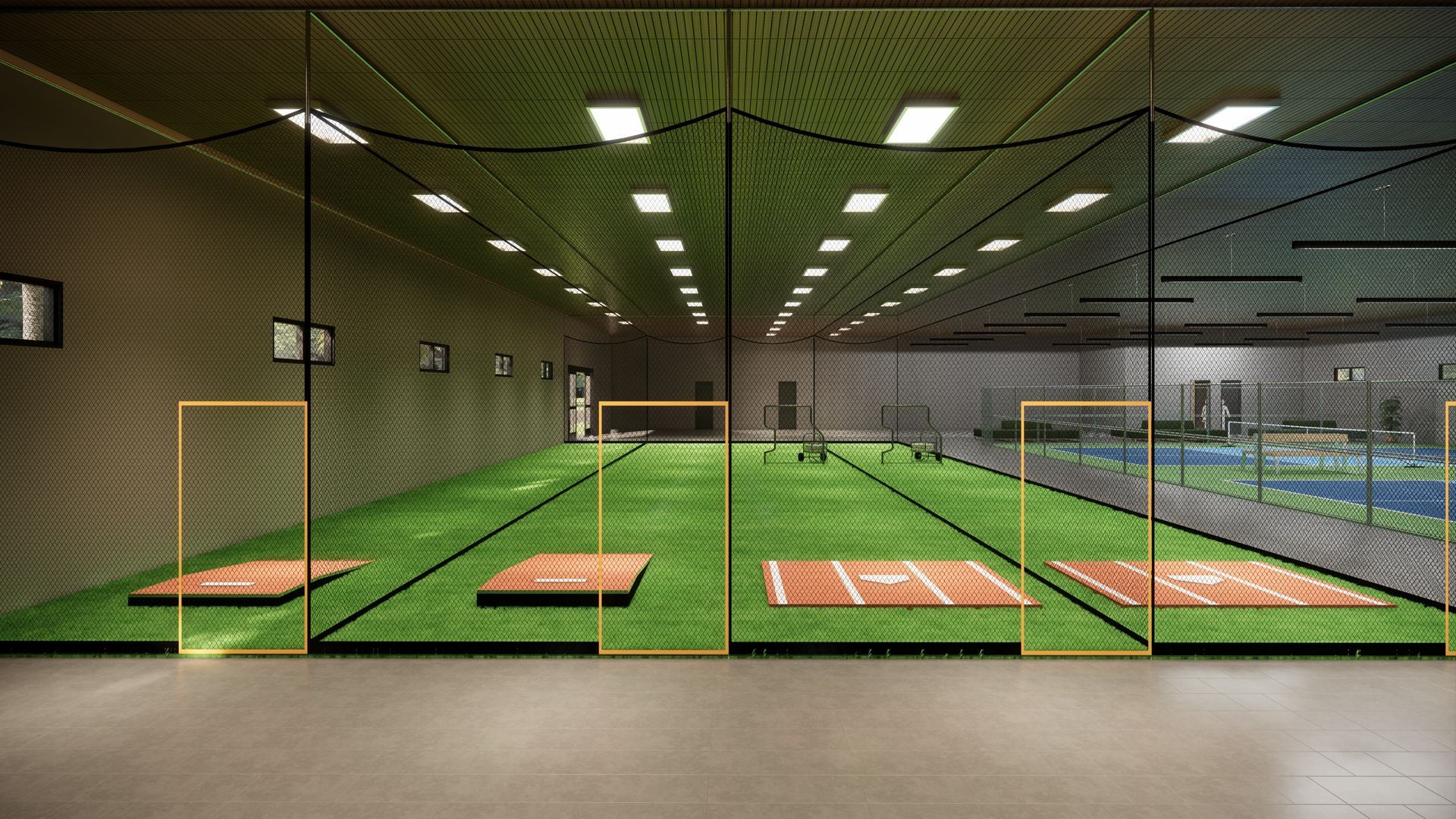
The fundamental placement principle for batting cage lighting is to keep fixtures out of the hitter's primary visual field while achieving the uniformity and illuminance targets required for effective ball tracking. This generally means placing fixtures along the side walls or in a configuration that provides illumination from above and to the sides of the hitting zone rather than directly in front of the hitter at the level of the release point.
Linear LED strip fixtures or high bay fixtures mounted along the side walls of the cage at a height that directs light across the hitting zone from both sides provide better vertical illuminance on the ball in flight than fixtures mounted directly overhead. Side-mounted fixtures also allow the fixture placement to be kept outside the critical visual cone between the hitter and the release point more easily than overhead fixtures, which reduces the glare problem that is particularly acute in lower-ceiling installations.
In facilities where ceiling height limits the mounting position options for fixtures, lower-output fixtures placed at closer intervals are generally preferable to fewer high-output fixtures placed at the standard industrial spacing. This approach produces better uniformity at the cost of a more complex fixture layout and higher fixture count, but the uniformity improvement directly affects the quality of the training environment in ways that a smaller number of high-output fixtures cannot achieve if they create bright spots and shadows in the hitting zone. Indoor baseball facility turf and netting solutions for Texas programs cover the complete indoor facility planning picture, which lighting design is part of.
Glare Control Strategies
Glare control in batting cage lighting design requires addressing both direct glare from fixtures in the visual field and reflected glare from bright surfaces that redirect fixture output toward the hitter's eye.
Direct glare control begins with fixture placement as described above, keeping sources out of the critical visual cone. It is reinforced through fixture selection for the appropriate beam angle and shielding. A fixture with a narrow beam angle concentrates its output in a specific direction, which allows the fixture to be aimed at the intended target area without spreading light into the hitter's visual field.
Fixtures with optical control that limits off-axis light output are preferable to bare source fixtures that distribute light broadly in all directions.
Reflective surfaces in the cage environment, including white or light-colored walls, ceiling panels, and the netting itself, can redirect fixture output in directions that create reflected glare. Matte finishes on ceiling and wall surfaces reduce the specular reflection that produces the most disruptive glare. Dark-colored netting materials absorb more light than light-colored alternatives and reduce the amount of fixture output that is reflected back toward the hitter from the netting surfaces.
Emergency lighting requirements must also be addressed in indoor batting cage facilities as part of the overall lighting design. Emergency egress lighting that ensures adequate visibility for safe exit in the event of a power interruption is a code requirement in occupied facilities and must be incorporated into the lighting plan as a distinct system from the primary training lighting. Batting cage permit requirements in Texas covers the code and permitting considerations that apply to indoor batting cage installations in Texas.
Planning for Maintenance Access
Lighting maintenance is an operational reality that the physical design of the lighting system should account for. Fixtures mounted in locations that require specialized equipment or significant effort to access for relamping or maintenance create operational costs and potential safety risks that a more maintenance-friendly layout would avoid.
In batting cage environments, the netting itself creates an additional maintenance access challenge. Fixtures mounted inside the cage envelope require the netting to be moved or the cage to be taken out of service for maintenance access. Where possible, mounting fixtures outside the netting envelope or in positions that can be serviced from outside the cage reduces maintenance disruption to facility operations.
Fixture selection for long service life reduces maintenance frequency regardless of access difficulty. LED fixtures with rated service lives of fifty thousand hours or more require significantly less frequent maintenance than metal halide or fluorescent alternatives, which translates to lower maintenance costs and less operational disruption over the facility's service life.
The initial cost premium for high-quality LED fixtures with long rated service lives is typically recovered through reduced maintenance costs within the first several years of operation, making fixture longevity a relevant factor in the economic evaluation of lighting options.
Frequently Asked Questions About Batting Cage Lighting Design for Indoor Facilities
How many foot-candles do I need for an indoor batting cage?
The appropriate foot-candle level depends on the level of play and training intensity the facility supports. A minimum of fifty foot-candles at the plate is generally considered the baseline for recreational and school-level batting cage use, while competitive training facilities benefit from seventy-five to one hundred foot-candles for better ball tracking at higher pitch speeds. The IES publishes sports lighting guidelines that provide reference targets for different activity levels and can be used as a planning benchmark. Equally important is achieving adequate uniformity across the cage, with a maximum-to-minimum ratio of no more than three to one to avoid the bright spots and shadows that make consistent ball tracking difficult.
What is the best fixture type for indoor batting cage lighting?
LED fixtures are the current standard for indoor batting cage lighting in new installations and retrofits due to their combination of consistent light output over time, energy efficiency, long service life, and low heat generation. Within the LED category, fixtures should be selected for an appropriate CRI of eighty or above for good color rendering, color temperature in the four thousand to five thousand Kelvin range for sports training environments, and optical control that limits off-axis light output to reduce glare. High bay LED fixtures designed for sports applications are generally appropriate for batting cages with ceiling heights of sixteen feet or above, while lower ceiling installations may benefit from linear LED strip fixtures at closer spacing for better uniformity.
How do I prevent glare in an indoor batting cage lighting design?
Glare prevention in batting cage lighting starts with fixture placement that keeps light sources out of the hitter's critical visual field between the batter's box and the pitch release point. Side wall mounting at an appropriate height is often preferable to direct overhead mounting for this reason. Fixture selection for narrow beam angles and optical shielding limits off-axis light output that contributes to glare. Matte finishes on wall and ceiling surfaces reduce specular reflection that can direct fixture output toward the hitter's eyes. Dark colored netting materials absorb more light than light-colored alternatives and reduce reflected glare from the netting surfaces.
Can I use my existing gym lighting for a batting cage installation?
Existing gym lighting may provide adequate general illuminance for some batting cage uses but is unlikely to meet the uniformity and glare control requirements of a purpose-designed batting cage lighting system. Gym fixtures are typically positioned and aimed for horizontal surface illuminance on the gym floor rather than for vertical illuminance on a moving ball in a hitting zone, and the fixture placement is rarely optimized to keep light sources out of the hitter's visual field in the batting cage orientation. A lighting assessment that evaluates the existing system against the specific requirements of the batting cage application is the appropriate starting point before assuming that existing lighting will be adequate.
What electrical and code requirements apply to indoor batting cage lighting in Texas?
Indoor batting cage lighting installations are subject to the National Electrical Code as adopted in Texas, which governs wiring, circuit protection, fixture mounting, and emergency lighting requirements. Facilities subject to building code jurisdiction must also meet the energy efficiency requirements of the International Energy Conservation Code as adopted by the jurisdiction, which affects fixture selection and control system requirements. Emergency egress lighting is required in occupied facilities and must be addressed as part of the lighting design. Consulting with a licensed electrical contractor and reviewing the specific requirements of the applicable jurisdiction before finalizing the lighting design is recommended to ensure code compliance.
How does turf flooring affect batting cage lighting design?
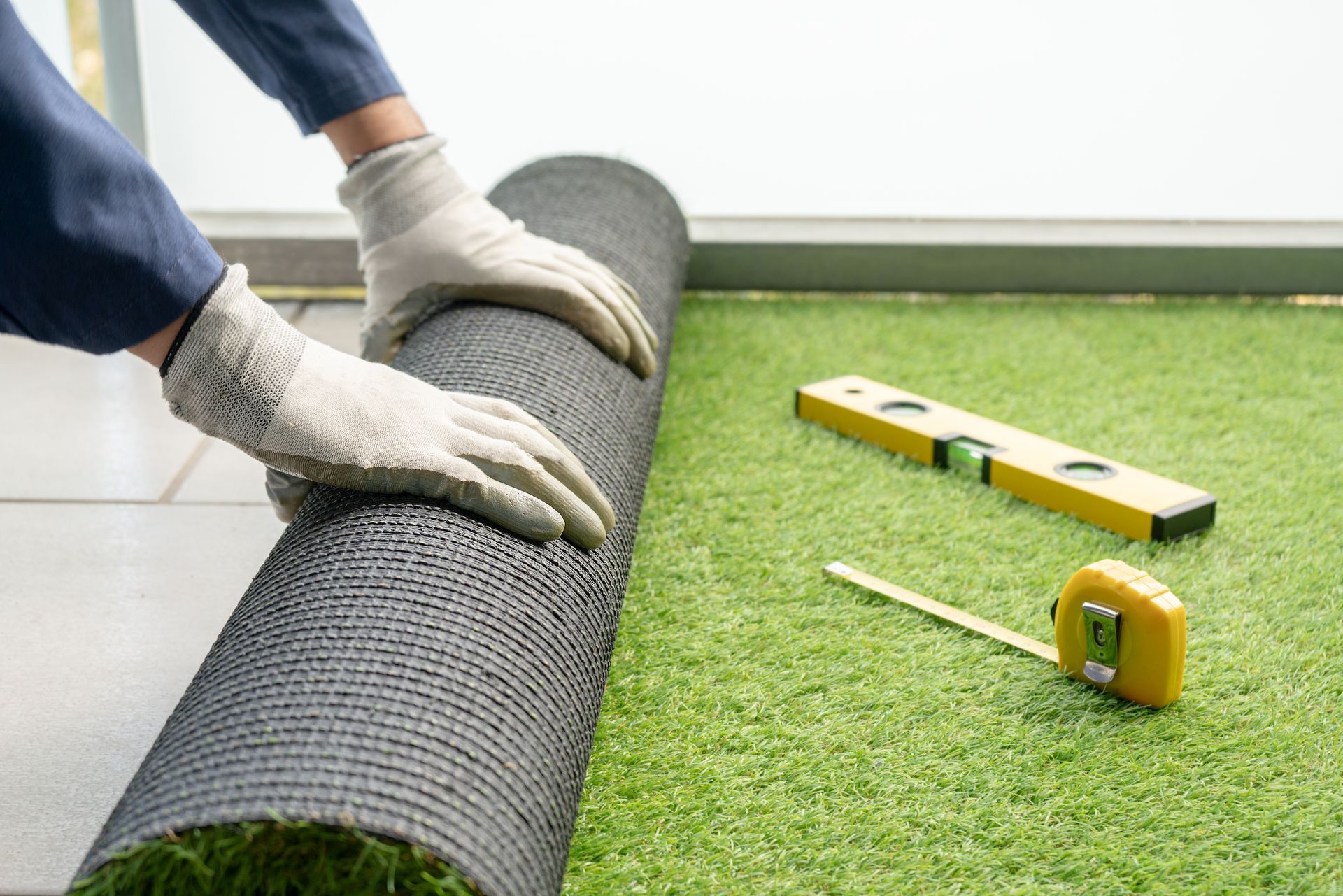
Turf flooring in a batting cage affects lighting design through its reflectance characteristics. Artificial turf surfaces in green or dark colors have relatively low reflectance compared to light-colored hard surface floors, which means less light is reflected from the floor surface back into the hitting zone. This lower floor reflectance increases the importance of adequate direct illuminance from fixtures since less of the total illuminance at the hitting zone comes from floor-reflected light than it would in a facility with a high-reflectance floor.
Turf flooring is the preferred surface for indoor batting cages for performance and safety reasons, and the lighting design should account for its reflectance characteristics when calculating the fixture output required to achieve target illuminance levels. Best turf flooring options for batting cages covers the turf selection considerations that complement lighting design for indoor batting cage installations.
Plan Your Batting Cage Lighting Right the First Time
Indoor batting cage lighting that supports effective training does not happen by accident. It requires deliberate planning, appropriate fixture selection, and a layout designed for the specific visual demands of the hitting environment. Call Texas Sports Turf & Netting at 281-215-6273 or contact us online to discuss your indoor batting cage lighting and facility planning needs.
SEO Title:
Meta Description: Texas Sports Turf & Netting explains indoor batting cage lighting design, layout, glare reduction, and safety planning. Call 281-215-6273 to plan your facility.
URL Slug: /batting-cage-lighting-design-indoor-facilities


Batting Cage Maintenance Checklist for Schools and Facilities: Preparing for High-Usage Fall Seasons